Math · Built from a recipe
Attractors
A5 on the major comb. Its drum rings at 847.7 Hz.
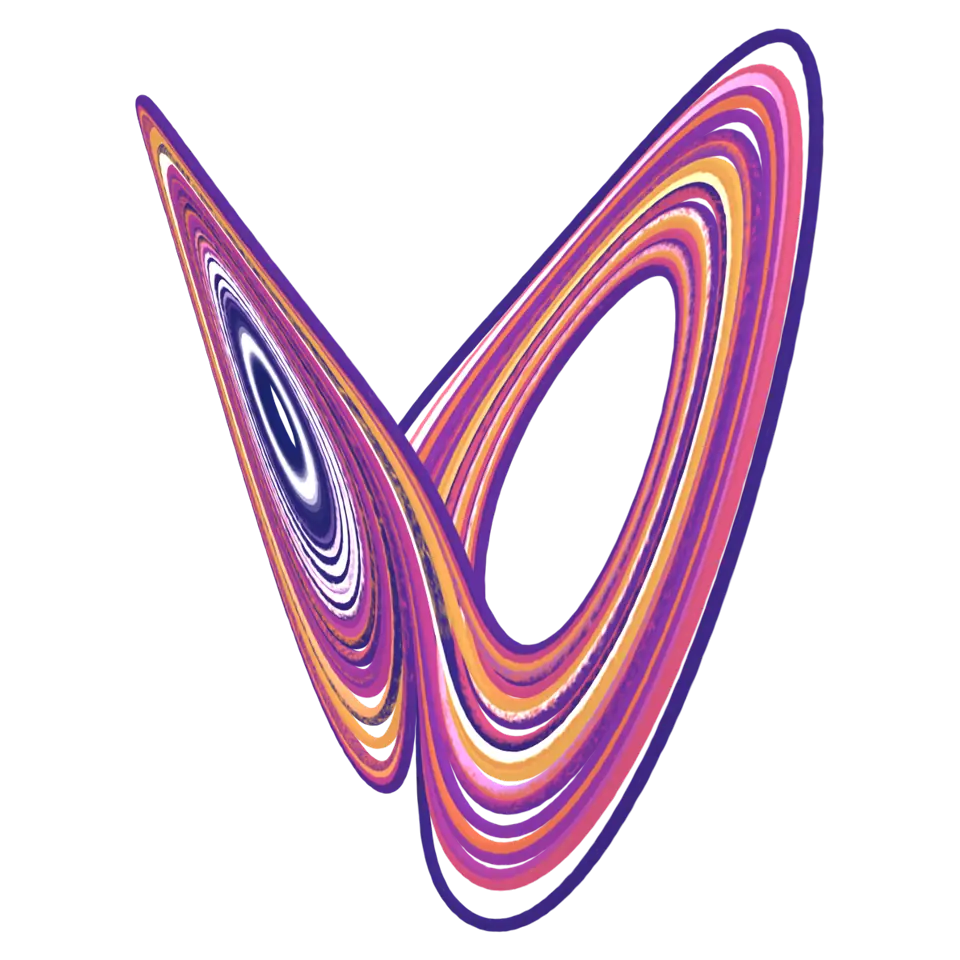
In 1963 the scientist Edward Lorenz made a very simple model of moving air: three short equations.
- Shelf
- Math
- Kind
- Built from a recipe
- Sound
- Yes
- Hands-on
- Yes
- Licenses
- Own work (made in the page)
Its note
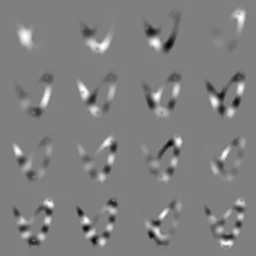
Splashery stretches a drumhead over this Splash's outline, twelve inches across, and finds the ways it can ring. Its lowest is 847.7 Hz, 65 cents flat of A5, the nearest tine on the comb. The next fifteen are its overtones, and each one draws its own figure: sand gathers on the lines that stay still.
- 1848 Hz
- 21110 Hz
- 31167 Hz
- 41185 Hz
- 51319 Hz
- 61381 Hz
- 71413 Hz
- 81443 Hz
- 91503 Hz
- 101551 Hz
- 111617 Hz
- 121663 Hz
- 131699 Hz
- 141738 Hz
- 151777 Hz
- 161835 Hz
How to play
Tap it to race a spark round. Hands-on: drag the point to a new start; let go.
Its controls
| Control | Kind | Range | Start |
|---|---|---|---|
| Race along the path | Tap | ||
| Glow | Slider | 0 to 100% | 70% |
| Race | Button |
About it
In 1963 the scientist Edward Lorenz made a very simple model of moving air: three short equations. He found that its path loops around two centers forever, never repeating and never crossing itself, in a shape like a pair of butterfly wings. This shape is called the Lorenz attractor.
Tap it and a bright spark races along the whole path, drawing it again in light that then fades. Two starting points that are almost the same soon follow very different paths. This is called chaos, or the butterfly effect, and it is why weather is so hard to forecast far ahead.
Details
- Splats
- Opens at 200,000 at Mid Detail, 60,000 at Low, and up to 900,000 at Max
Sources and credits
Made in Splashery. Its code is MIT.