Math · Built from a recipe
Gyroid
C5 on the major comb. Its drum rings at 539.6 Hz.
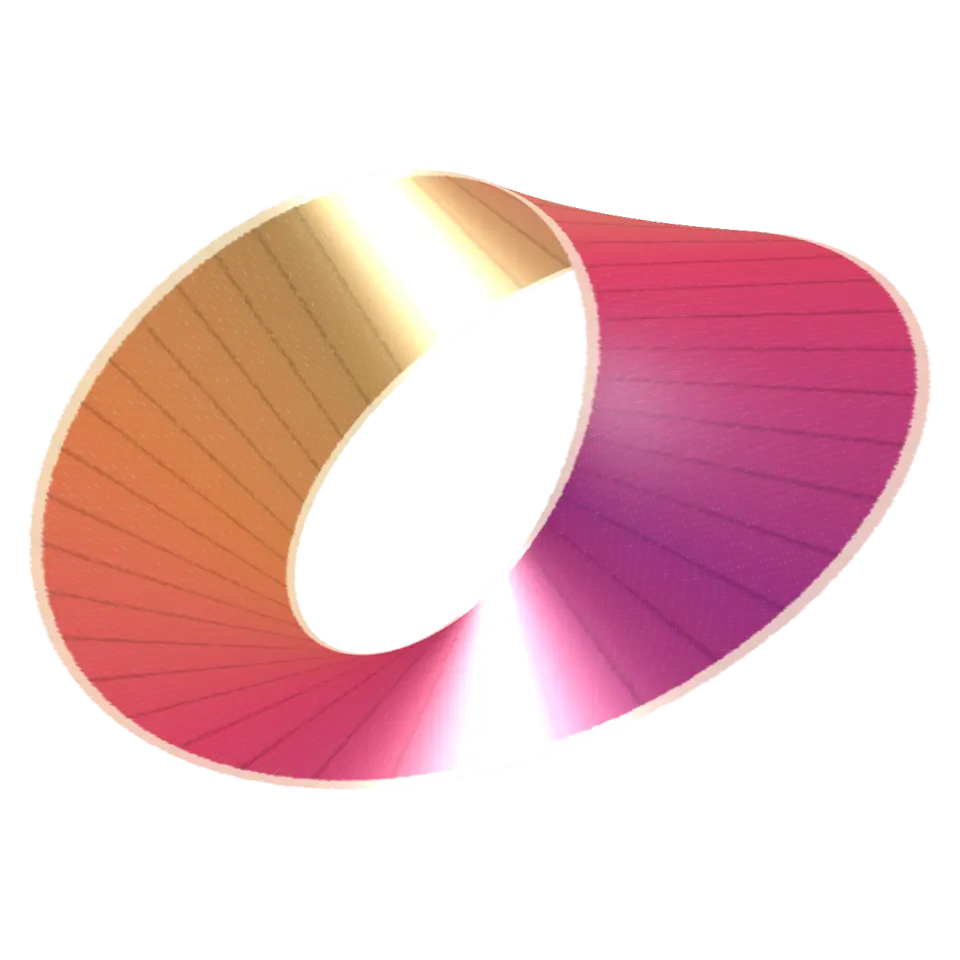
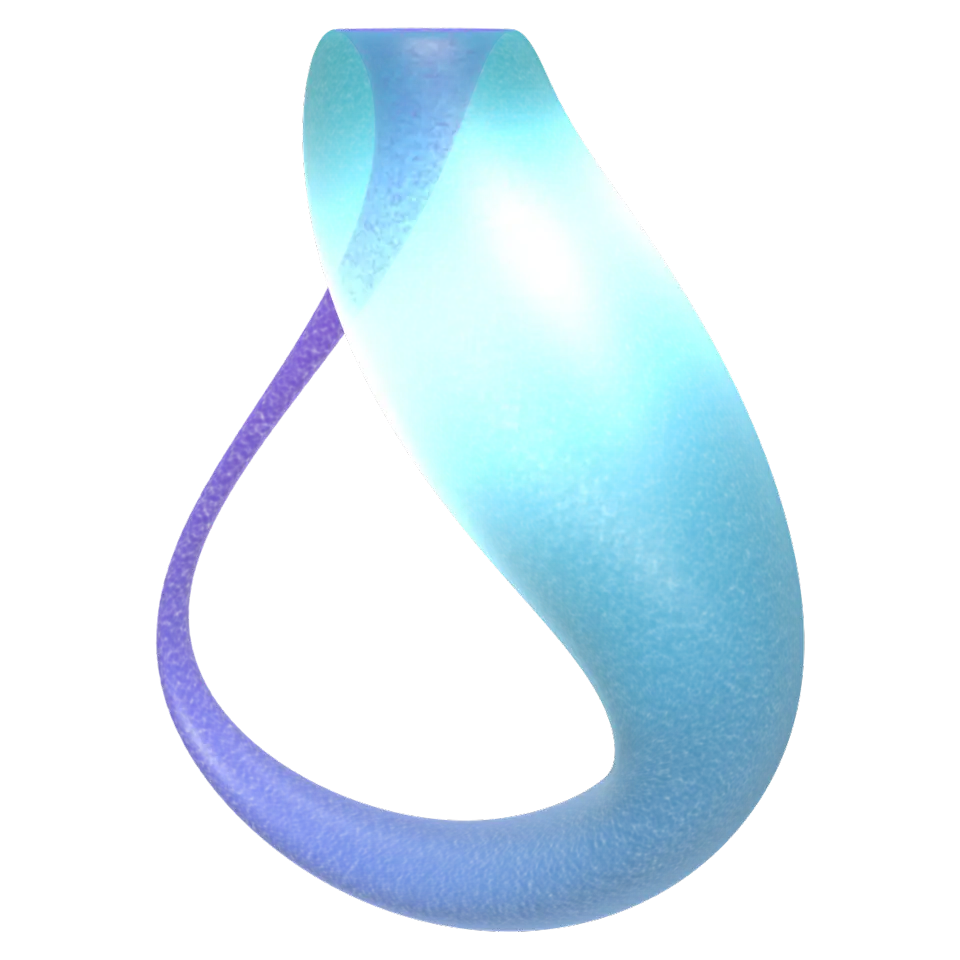
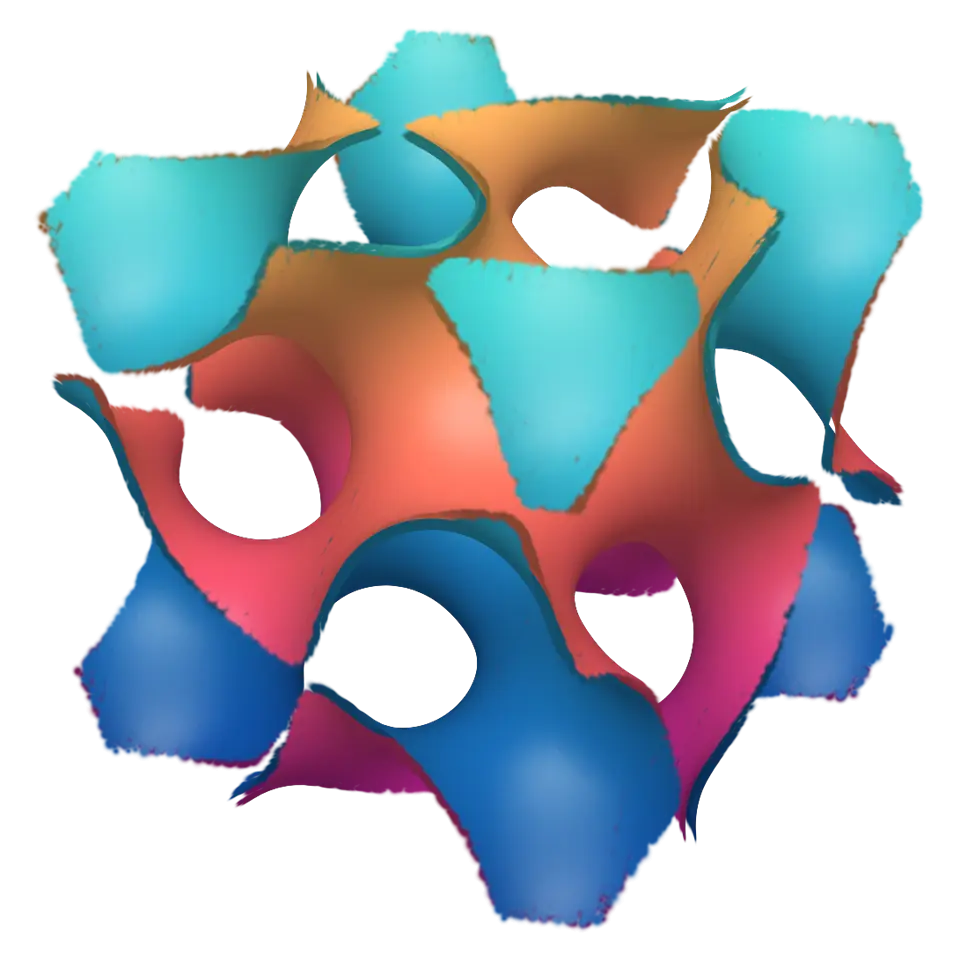
A gyroid is a curving surface that splits space into two tangled mazes of tunnels that never meet.
- Shelf
- Math
- Kind
- Built from a recipe
- Sound
- Yes
- Licenses
- Own work (made in the page)
Its note
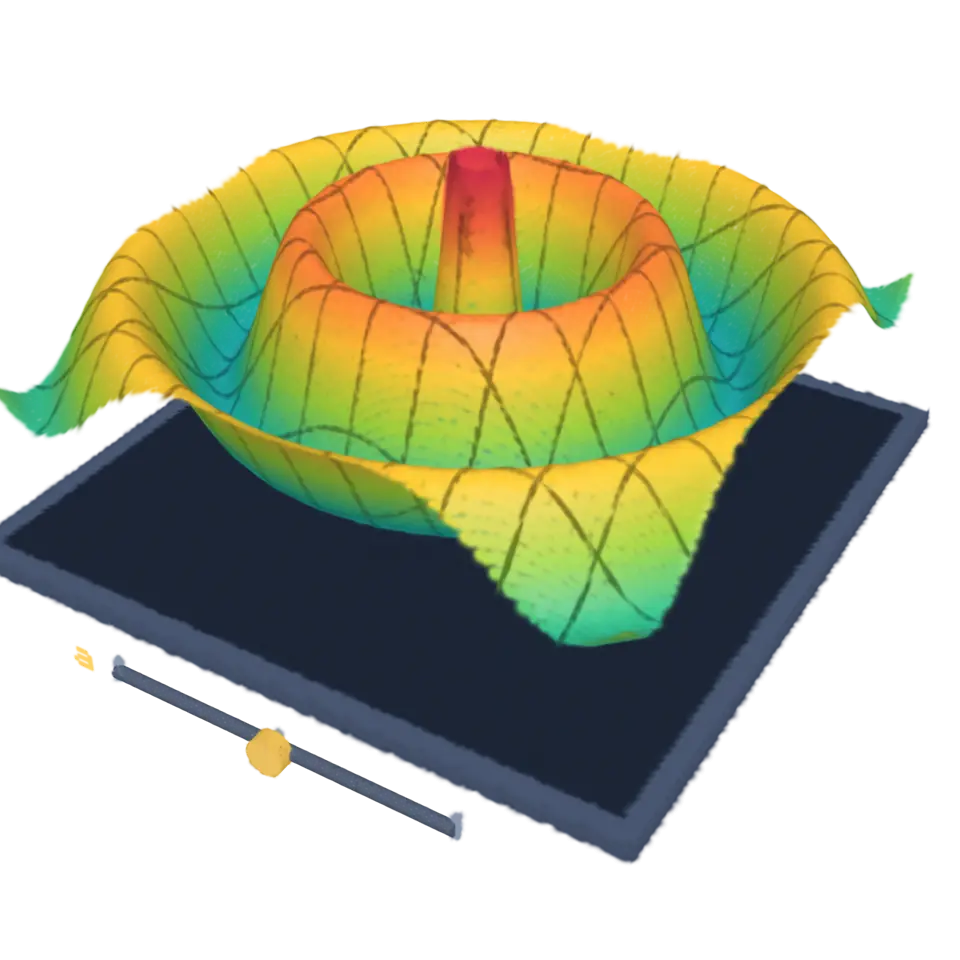
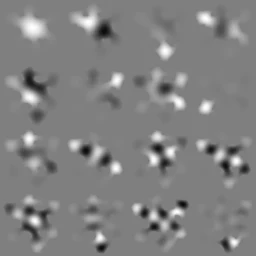
Splashery stretches a drumhead over this Splash's outline, twelve inches across, and finds the ways it can ring. Its lowest is 539.6 Hz, 53 cents sharp of C5, the nearest tine on the comb. The next fifteen are its overtones, and each one draws its own figure: sand gathers on the lines that stay still.
- 1540 Hz
- 2758 Hz
- 3867 Hz
- 4885 Hz
- 5896 Hz
- 6966 Hz
- 7989 Hz
- 81000 Hz
- 91015 Hz
- 101090 Hz
- 111167 Hz
- 121223 Hz
- 131261 Hz
- 141323 Hz
- 151366 Hz
- 161386 Hz
How to play
Tap to make it breathe. Pick a cube or a ball in the Splash tab.
Its controls
| Control | Kind | Range | Start |
|---|---|---|---|
| Breathe in and out | Tap | ||
| Breathe | Button | ||
| Shape | List | 2 choices | Cube |
About it
A gyroid is a curving surface that splits space into two tangled mazes of tunnels that never meet. It has no straight lines and no flat parts, and it repeats forever in every direction. Alan Schoen, a scientist working for NASA, found it in 1970. Nature makes it too: tiny gyroid crystals in some butterfly wings give them their shiny green color.
Tap it and it breathes: the surface slides along itself, so one set of tunnels swells while the other narrows, then the other way, and it settles. In the Splash tab, cut it into a cube or a ball.
Details
- Splats
- Opens at 200,000 at Mid Detail, 60,000 at Low, and up to 710,000 at Max
Sources and credits
Made in Splashery. Its code is MIT.