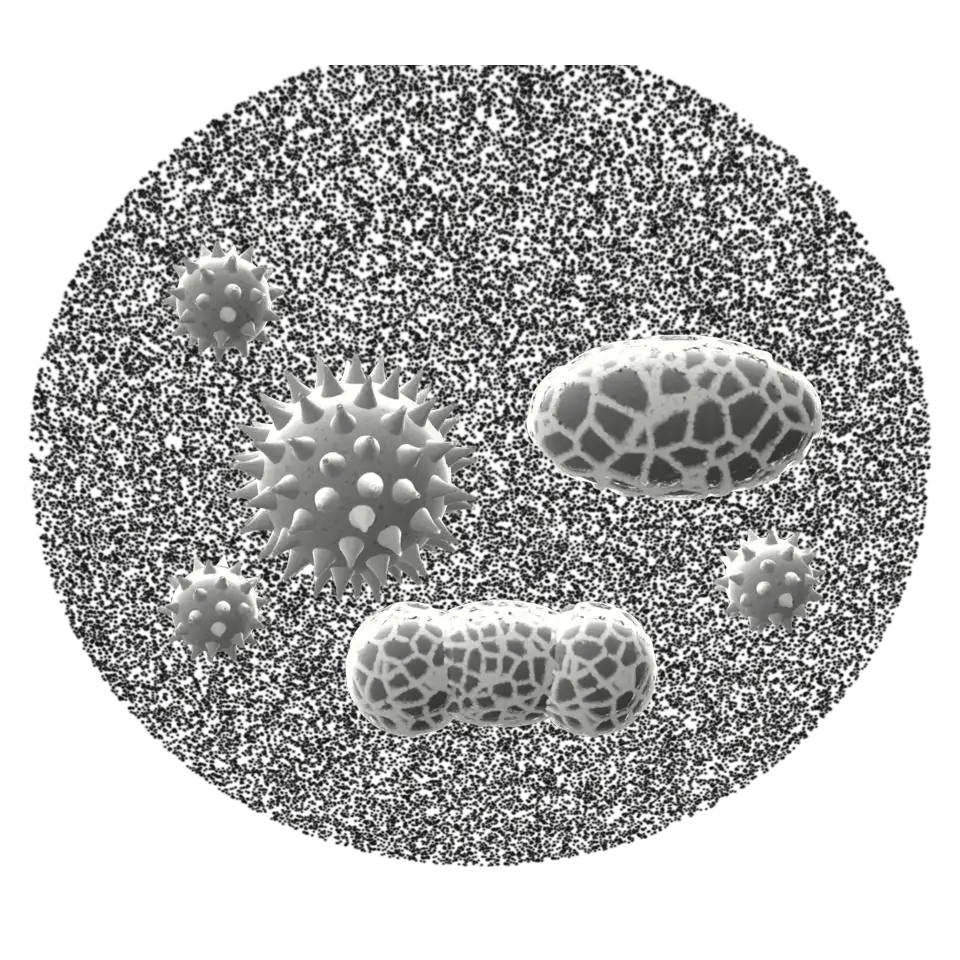
Imaging · Built from a recipe
Electron Microscope
C6 on the major comb. Its drum rings at 993.5 Hz.
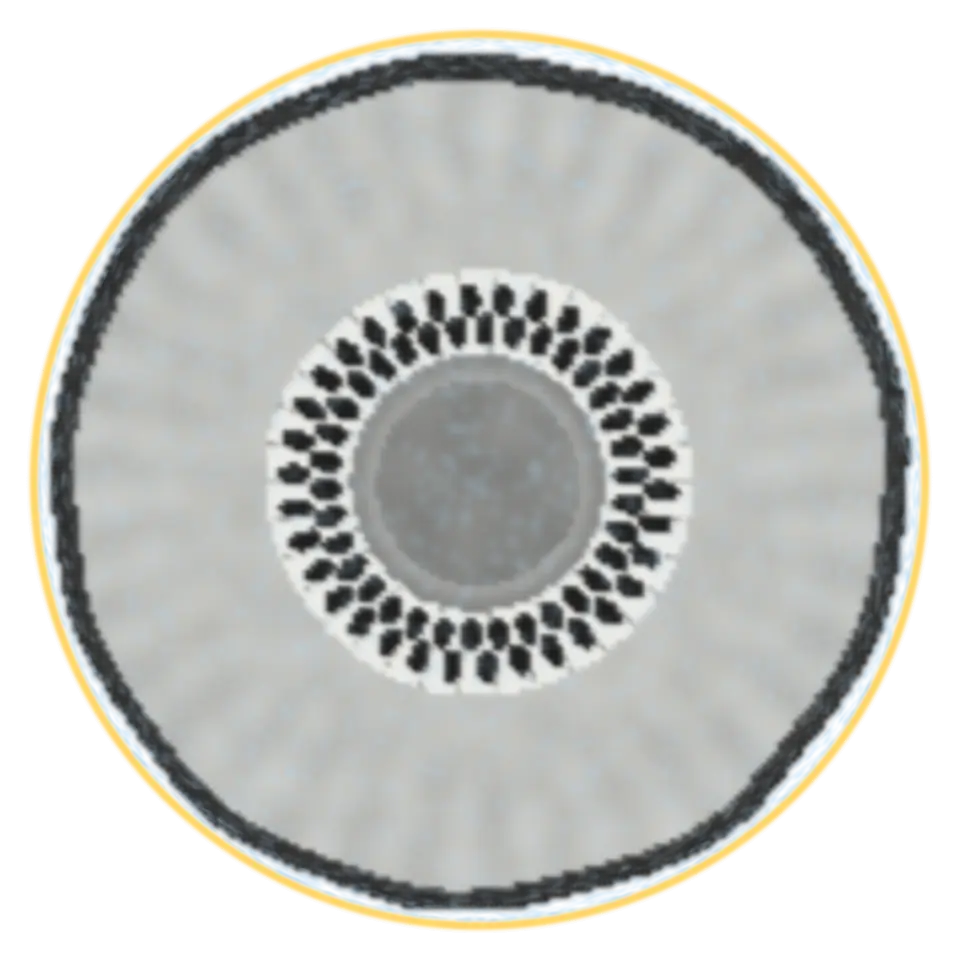
A scanning electron microscope sweeps a fine beam of electrons across a sample in a vacuum.
- Shelf
- Imaging
- Kind
- Built from a recipe
- Sound
- Yes
- Licenses
- Own work (made in the page)
Its note
Splashery stretches a drumhead over this Splash's outline, twelve inches across, and finds the ways it can ring. Its lowest is 993.5 Hz, 90 cents flat of C6, the nearest tine on the comb. The next fifteen are its overtones, and each one draws its own figure: sand gathers on the lines that stay still.
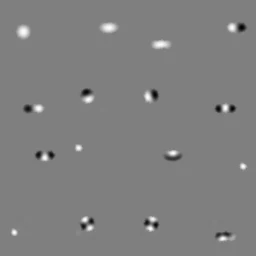
- 1994 Hz
- 21064 Hz
- 31204 Hz
- 41443 Hz
- 51475 Hz
- 61566 Hz
- 71588 Hz
- 81822 Hz
- 91853 Hz
- 101865 Hz
- 111906 Hz
- 121953 Hz
- 132020 Hz
- 142087 Hz
- 152119 Hz
- 162204 Hz
How to play
Tap a grain or shell to zoom in, again to look closer; a third tap goes back out. Tap another to zoom on it.
Its controls
| Control | Kind | Range | Start |
|---|---|---|---|
| Zoom in a step on the object you tap (the third tap goes back out) | Tap | ||
| Zoom | Button | ||
| Sample | List | 3 choices | Pollen |
| Vision | List | 3 choices | Gray (realistic) |
About it
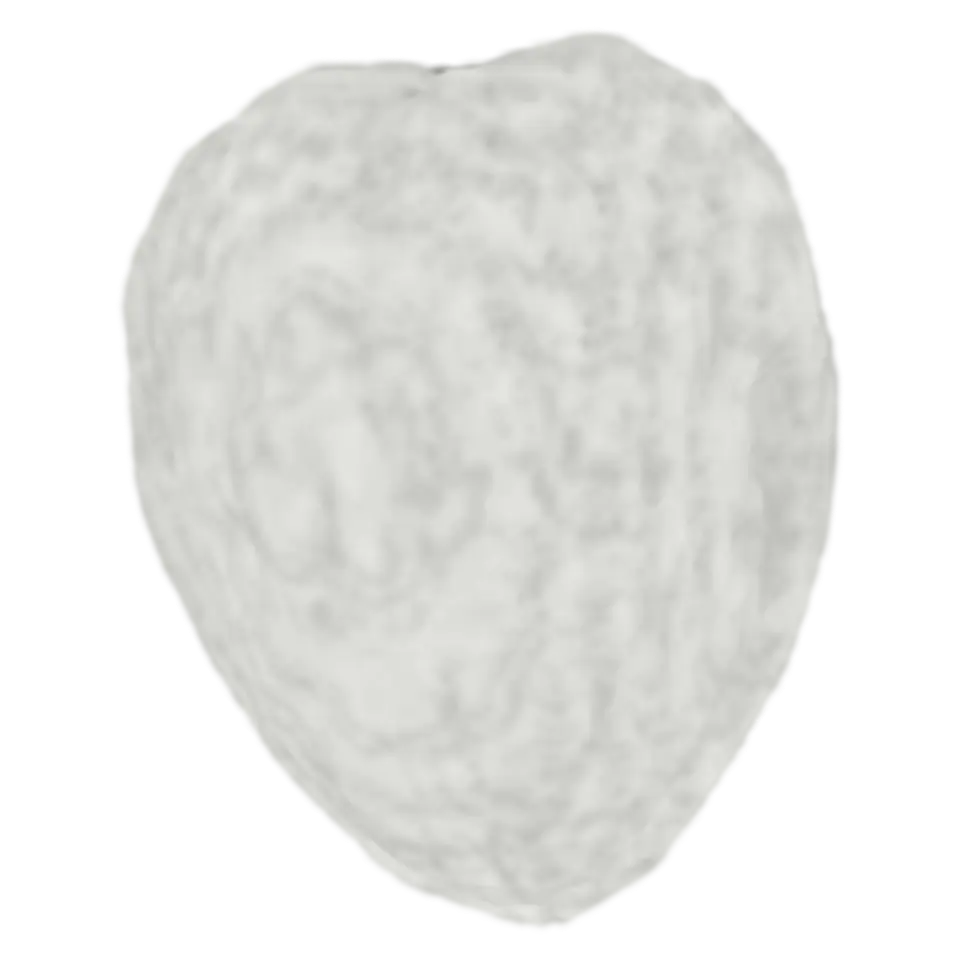
A scanning electron microscope sweeps a fine beam of electrons across a sample in a vacuum. Where the beam hits, the surface gives off low-energy electrons, and a detector counts them, point by point, into a gray picture. More escape where the beam meets the surface at a slant, so edges and spines glow, and the side facing away from the detector falls into shadow. It can show things far smaller than light can: pollen grains a few hundredths of a millimeter across, the rows of tiny pores in a diatom's glass shell, or the frozen droplets on a snowflake (snow is imaged cold, in a special stage).
The samples here are built for the splash in a microscope's grays. Tap any grain, shell, or crystal to zoom in from the whole field to it, then to its surface. Vision in the Splash tab recolors the picture: the realistic gray, a night-vision scope's green, or an infrared camera's colors (for fun: an electron microscope sees no color).
Details
- Splats
- Opens at 200,000 at Mid Detail, 107,088 at Low, and up to 700,000 at Max
Sources and credits
Made in Splashery. Its code is MIT.