Tiny World · Built from a recipe
Neuron Specimen
G4 on the major comb. Its drum rings at 365.9 Hz.
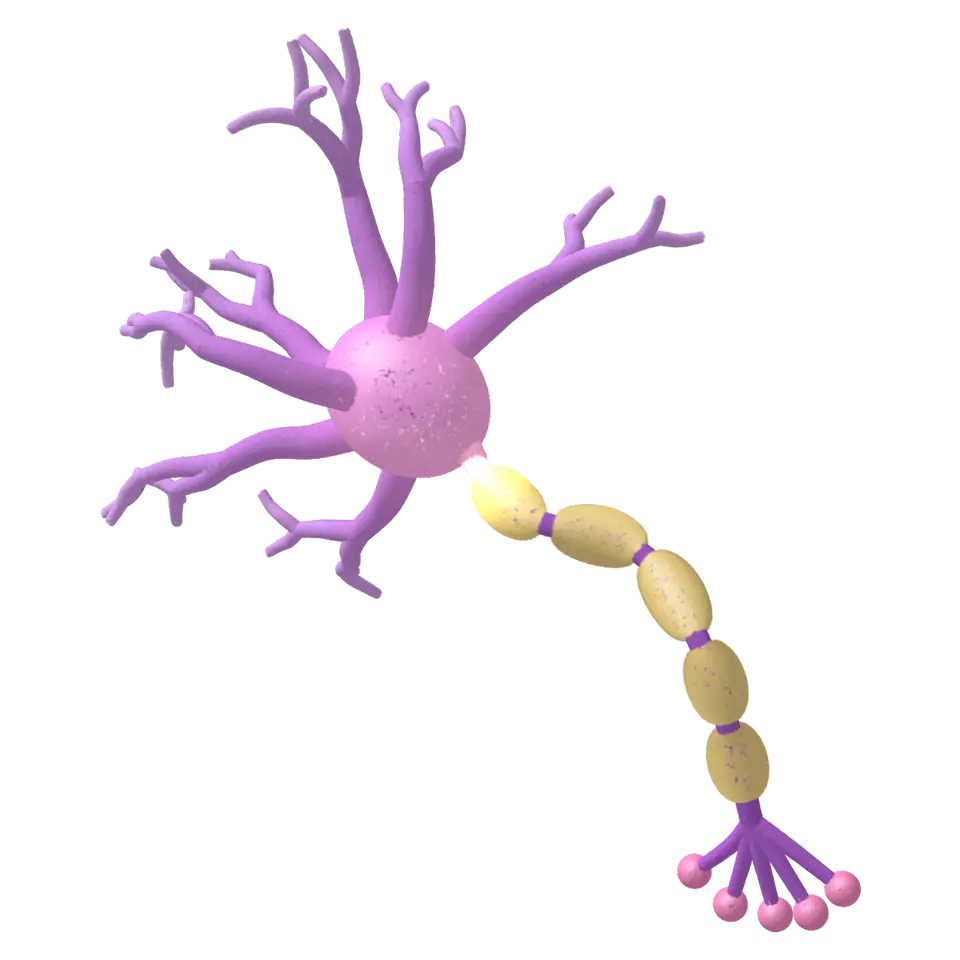
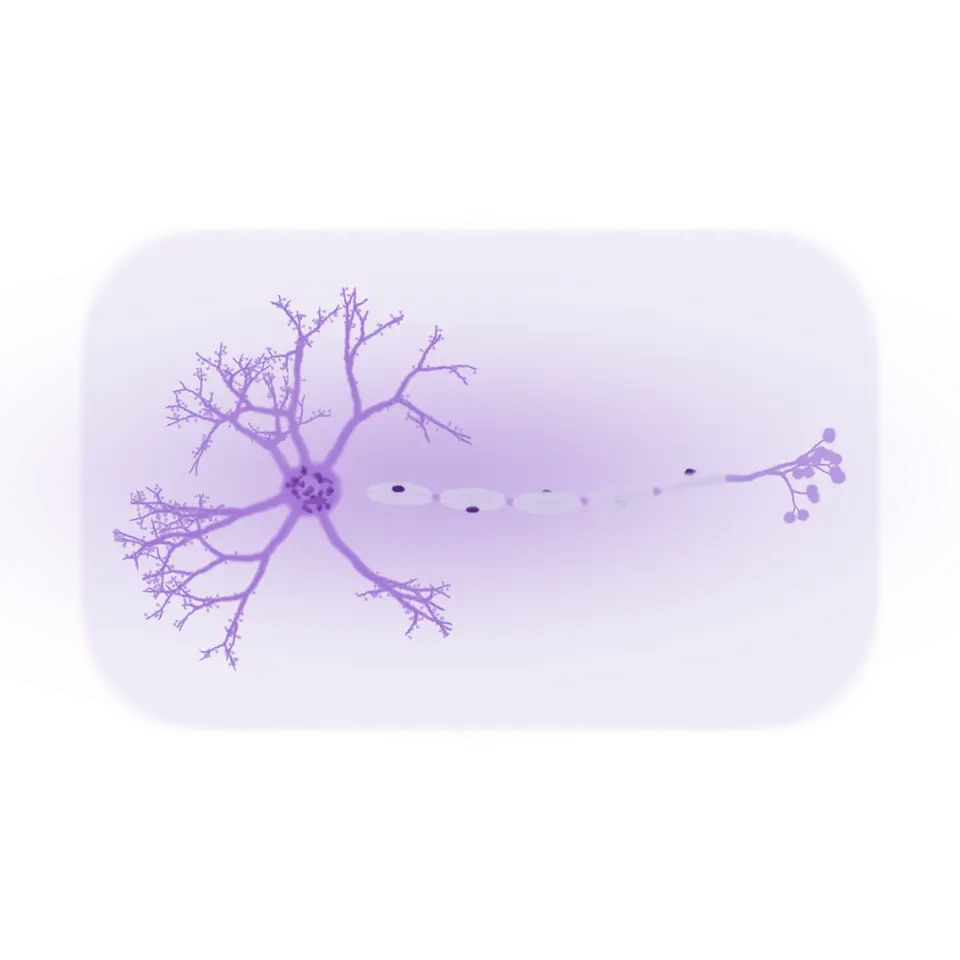
A textbook nerve cell on a lit microscope slide: dendrites, a cell body with its nucleus and Nissl bodies, a myelinated axon, and terminals.
- Shelf
- Tiny World
- Kind
- Built from a recipe
- Sound
- Yes
- Licenses
- CC0, MIT
Its note
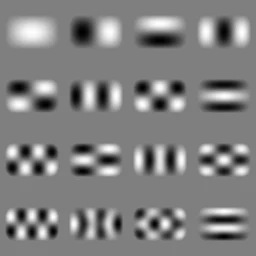
Splashery stretches a drumhead over this Splash's outline, twelve inches across, and finds the ways it can ring. Its lowest is 365.9 Hz, 119 cents flat of G4, the nearest tine on the comb. The next fifteen are its overtones, and each one draws its own figure: sand gathers on the lines that stay still.
- 1366 Hz
- 2499 Hz
- 3649 Hz
- 4664 Hz
- 5736 Hz
- 6842 Hz
- 7861 Hz
- 8947 Hz
- 91008 Hz
- 101012 Hz
- 111024 Hz
- 121110 Hz
- 131168 Hz
- 141206 Hz
- 151237 Hz
- 161250 Hz
How to play
Tap the cell to stimulate it there. In Splash, change the stain or turn Focus.
Its controls
| Control | Kind | Range | Start |
|---|---|---|---|
| Fire a spike | Tap | ||
| Focus | Slider | 0 to 100% | 100% |
| Fire a spike | Button | ||
| Stain | List | 3 choices | Nissl · cresyl violet |
About it
From a concept by Ryan Kamp. A textbook nerve cell on a lit microscope slide: dendrites, a cell body with its nucleus and Nissl bodies, a myelinated axon, and terminals. At full Focus, most screens draw 32,768 splats, low-memory phones 8,192.
A tap is a stimulating electrode: the signal spreads through the dendrites to the cell body, which fires a spike down the axon, node to node. The waveform is the Hodgkin-Huxley squid axon model, slowed; this is a schematic, not a measured neuron. Nissl dyes the Nissl bodies and leaves the axon pale, Golgi turns the neuron black on amber, and H&E shows pink cytoplasm and blue-purple nuclei. Lower Focus: pairs of splats merge into one, keeping mass, center, and covariance, while the slide stays lit. Made by Ryan Kamp, CC0; code MIT.
Sources and credits
| Work | By | License |
|---|---|---|
| From a concept by Ryan Kamp. Procedural specimen made by Ryan Kamp; CC0. Code: MIT. | CC0, MIT | |
| Hodgkin-Huxley model (1952): squid giant axon; slowed for viewing. Stain colors follow textbook histology. The model is published science, not a licensed asset; the splash's simulation of it is Ryan Kamp's own procedural work. | CC0 1.0 |