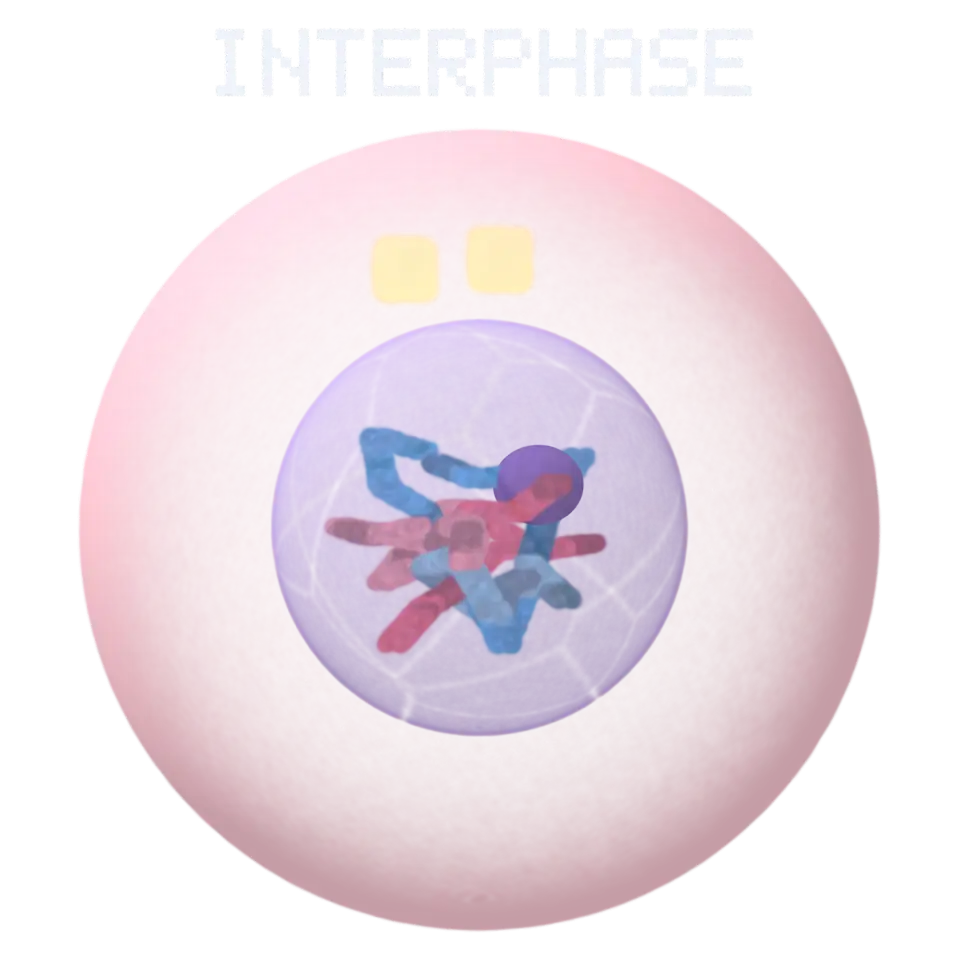
Tiny World · Built from a recipe
Cell Division
C6 on the major comb. Its drum rings at 1032.9 Hz.
Mitosis is how one cell becomes two with the same chromosomes.
- Shelf
- Tiny World
- Kind
- Built from a recipe
- Sound
- Yes
- Licenses
- Own work (made in the page)
Its note
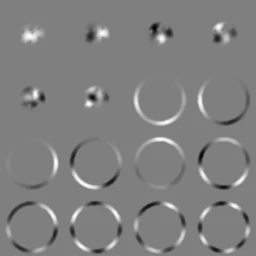
Splashery stretches a drumhead over this Splash's outline, twelve inches across, and finds the ways it can ring. Its lowest is 1032.9 Hz, 23 cents flat of C6. The next fifteen are its overtones, and each one draws its own figure: sand gathers on the lines that stay still.
- 11033 Hz
- 21224 Hz
- 31449 Hz
- 41506 Hz
- 51714 Hz
- 61759 Hz
- 71779 Hz
- 81781 Hz
- 91789 Hz
- 101836 Hz
- 111841 Hz
- 121852 Hz
- 131871 Hz
- 141891 Hz
- 151900 Hz
- 161931 Hz
How to play
Tap the cell to watch it divide in two, phase by phase.
Its controls
| Control | Kind | Range | Start |
|---|---|---|---|
| Divide | Tap | ||
| Divide | Button |
About it
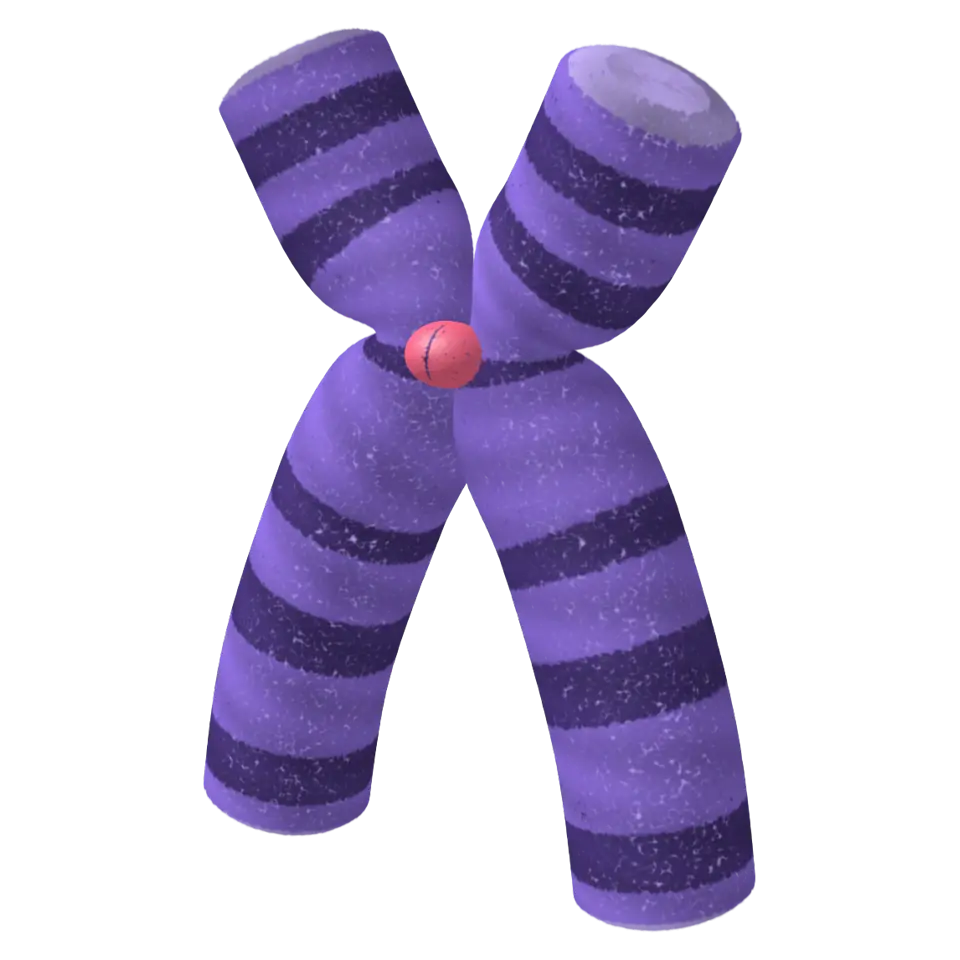
Mitosis is how one cell becomes two with the same chromosomes. Before it starts, each chromosome has been copied into two sister chromatids. Tap and the chromatin threads coil into compact chromosomes (prophase), the nuclear envelope breaks into pieces and spindle fibers from the two centrosomes reach the chromosomes (prometaphase), which line up across the middle (metaphase). The sisters are pulled to opposite poles (anaphase), new nuclei form round each set (telophase) and a ring pinches the cell in two (cytokinesis).
A human cell has 46 chromosomes; four are shown, two pairs. One daughter then grows back into a whole cell.
Details
- Splats
- Opens at 200,000 at Mid Detail, 59,681 at Low, and up to 760,000 at Max
Is it right?
The splash shows an animal cell dividing by mitosis, phase by phase, in the order and with the events a biology textbook gives. The cell is a diagram: four chromosomes stand for a human cell's 46, and the parts are drawn clear and simple.
Correct
Prophase: the chromatin condenses into chromosomes of two sister chromatids, the nucleolus disappears and the centrosomes move toward opposite poles.1
Thin chromatin threads draw into eight solid chromatids (four chromosomes, sisters side by side); the nucleolus shrinks away; the two centrosomes travel round the nucleus to the poles.
Simplified
Prometaphase: the nuclear envelope breaks into pieces and spindle microtubules reach the kinetochores.1
The envelope comes apart in twelve pieces; a fiber grows from each pole to each chromatid's kinetochore.
Correct
Metaphase: the chromosomes line up on the metaphase plate midway between the poles.1
The chromosomes move to the plane between the poles, each sister attached to its own pole.
Correct
Anaphase: the sister chromatids separate and are pulled to opposite poles, and the cell elongates.1
Each pair of sisters parts; each moves as a solid piece toward its pole as its fiber shortens; the poles move apart and the cell stretches.
Simplified
Telophase and cytokinesis: new nuclear envelopes form round each set of chromosomes, which decondense, and a contractile ring of actin pinches the cell in two at the cleavage furrow.1
New nuclei fade in round the chromosomes at each pole; a red ring at the equator closes as the membrane pinches into two cells.
Simplified
A human cell has 46 chromosomes; the splash shows four, two pairs of homologs (each a slightly different shade).2
Four chromosomes, two long and two short, in two shades of pink and two of blue.
- 1Biology 2e, 10.2 The Cell Cycle, OpenStax
- 2How many chromosomes do people have?, MedlinePlus Genetics (U.S. National Library of Medicine)
- Simplified
- Four chromosomes stand for 46; their banding is decorative, not a real karyotype.
- Simplified
- Each daughter gets one centrosome; the copy that appears beside it at the end stands for the duplication in the next S phase.
- Simplified
- Spindle fibers are drawn as a few lines (a real spindle has thousands of microtubules) and astral microtubules are left out.
- Simplified
- Only one daughter is followed: it grows back into the starting cell (G1), so the splash can play again; the other drifts away.
- Simplified
- The whole division takes about 18 seconds; in a human cell mitosis takes about an hour.
Sources and credits
Made in Splashery. Its code is MIT.