How marks are painted over
Some of Splashery's captures are of real things, and real things carry makers' names, logos, and plates. Here is how those come off without leaving a hole.
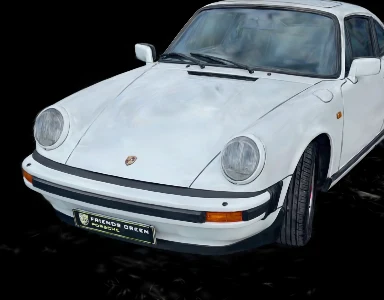 As captured
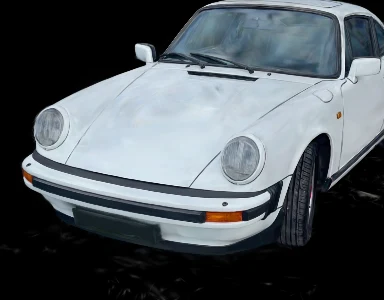 Painted over
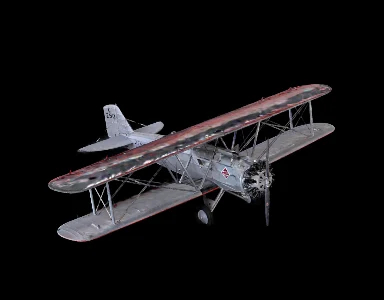 As captured
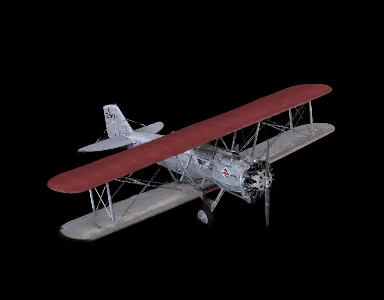 Painted over
Why you can't just cut a mark out
A capture isn't a skin with a picture on it. It is hundreds of thousands of small, soft, partly clear blobs called splats, and a surface is what they add up to. Remove the ones that make a logo and you find out what was behind them, which is usually nothing good.
An opaque sticker hides the surface under it, so the capture never needed anything there. Cut the sticker and you look straight into the object.
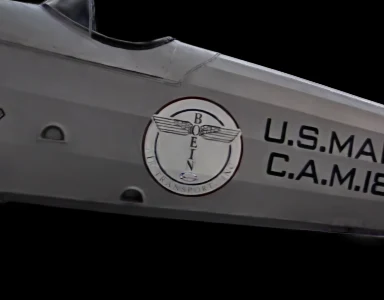 As captured
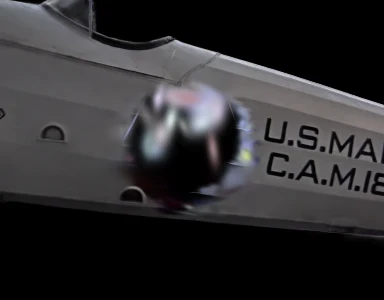 Cut out: a hole
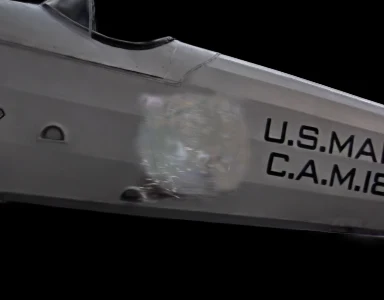 Recolored from neighbors, splat by splat: a blotch
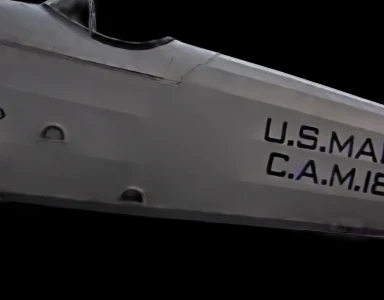 Painted over
What happens instead
- Read the surface like a photo. The area around the mark is rendered straight on, through every layer, into a flat picture in that surface's own coordinates.
- Fill the picture. The mark is painted out of that picture from the surface around it, so a stripe stays a stripe and a panel's shading carries across.
- Put the picture back. The splats that are already there take on the new colors. They stay where they are, in their own shapes, so no hole can open.
- Close the gaps. Fine lettering can leave real gaps in a surface. A thin layer of new flat splats closes them.
Sometimes the surface is better than it looks. A shiny hood's color comes from layers of clear splats behind its surface, and a badge just sits on top. There, the tool tests what removing the badge would leave, and if the surface holds up, the badge's own splats go. On the sports car's crest that test came out 0.7 off the fill on a scale of 255. On the opaque roundel it came out 82, so the roundel was painted.
What each kind of mark gets
| Mark | What happens |
|---|---|
| A badge on shiny paint | Its own splats are removed, when the test says the surface holds. |
| A decal, emblem, or roundel | Repainted from the surface around it, with a thin backing for gaps. |
| Lettering on a stripe | The stripe is rejoined along its length, so it stays one clean stripe. |
| A plate | A blank plate, in the plate's own color. |
| Half of a blurred, symmetric part | The sharp half's own picture, mirrored. |
| A surface the capture missed | Painted from what the capture does know about it. |
The wing the capture missed
The Mail Biplane's capture has almost nothing of the top of its upper wing: it came out as a smear of red and black. It's now painted as doped fabric, and the choices come from the capture itself: the red is the red of the lower wing's underside, the ribs are spaced as they are on the same wing's underside, and the surface is fitted to the wing's real shape. It's a painting, and its credit says so.
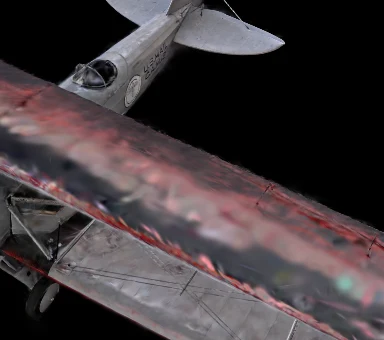 As captured
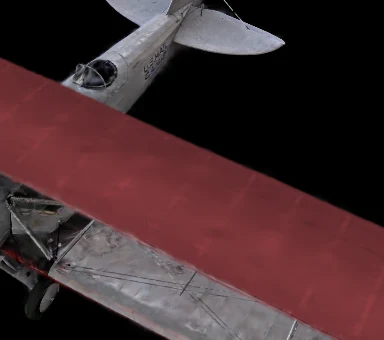 Painted over
The numbers
From 13 angles around each mark, this counts the pixels that lost 5% or more of their opacity. That is what a hole looks like to a computer.
| Mark | Cut out | Painted over |
|---|---|---|
| The biplane's roundel | 17.1% | 0% |
| The sports car's plate | 7.7% | 0.13% |
| The rover's emblem | 3.5% | 0% |
| The track car's stripe | 0.5% | 0.05% |
It costs almost nothing in size. The full files, against the same splats packed with no edit:
| Capture | Before | After |
|---|---|---|
| Classic Sports Car | 4.62 MB | 4.63 MB |
| Track Car | 7.54 MB | 7.52 MB |
| Perseverance Rover | 11.75 MB | 11.78 MB |
| Mail Biplane, with its cloth | 4.54 MB | 4.85 MB |
What isn't perfect
From about 45° below the Track Car's door you can still find a faint trace of its lettering, because those letters were captured as a thin cloud in front of the door and not on it. A plate that's painted blank is a blank plate, not the bumper behind it: the bumper there was too poorly captured to continue.
Where it's written down
Each capture's credit says what was changed. Every mark, painted or not, has a row in the project's list of redactions, with what it was and why. Credits lists every Splash's sources.